Sep.14,2026
What is a box type substation? It is a factory-assembled, enclosed power distribution unit that integrates medium- or high-voltage switchgear, a distribution transformer, and low-voltage equipment in one compact enclosure. It reduces incoming voltage to a usable level and distributes electricity safely to commercial, industrial, infrastructure, or renewable-energy loads. I generally describe it as a prefabricated electrical substation designed for faster installation and controlled site deployment.
!
A box type substation, also called a box-type substation, compact substation, or prefabricated substation, combines several power-distribution functions inside a weather-resistant enclosure. Instead of constructing a separate building for high-voltage equipment, the transformer, and low-voltage switchboards, the manufacturer assembles these systems into coordinated compartments before delivery. The completed unit can then be transported to the project site, positioned on a prepared foundation, connected, tested, and commissioned.
I use the term compact electrical substation because the equipment performs the same basic voltage-transformation and distribution duties as a conventional substation while occupying a more controlled installation area. The design is particularly suitable where land, construction time, safety access, or environmental protection affects the project budget. However, the enclosure does not remove the need for correct protection coordination, grounding, ventilation, clearances, and maintenance access.
The typical voltage path begins with a medium-voltage incoming cable or overhead connection. High-voltage switchgear receives and isolates the supply, the transformer reduces the voltage, and low-voltage equipment distributes power to final circuits. Depending on the project, the substation may include metering, surge protection, current transformers, voltage transformers, relays, circuit breakers, busbars, and communication devices.
I explain the operating principle as a controlled sequence from the utility or renewable-energy source to the customer load:
Medium-voltage input: Incoming power enters through a cable termination, load-break switch, circuit breaker, or other approved switching device. The equipment is selected according to the system voltage, short-circuit level, insulation requirements, and operating method.
High-voltage protection: The high-voltage compartment isolates faults and allows authorized personnel to disconnect the transformer. Protection may include fuses, vacuum circuit breakers, overcurrent relays, earth-fault protection, surge arresters, and mechanical or electrical interlocking.
Voltage transformation: The distribution transformer transfers electrical energy between windings through electromagnetic induction. A common configuration reduces medium voltage to a low-voltage output suitable for commercial buildings, factories, pumping stations, charging infrastructure, or other loads.
Low-voltage distribution: The reduced voltage reaches the low-voltage switchboard, where a main circuit breaker, busbar system, outgoing feeders, metering, and protection devices divide power among downstream circuits.
Load supply and monitoring: Feeder circuits deliver electricity to motors, lighting, process equipment, HVAC systems, battery storage, electric-vehicle chargers, or other electrical loads. Monitoring devices can record current, voltage, power factor, energy consumption, and alarm conditions.
The three compartments are normally separated to control access and reduce the chance that work in one area will expose personnel to energized equipment in another. Physical barriers, doors, locks, interlocks, and warning labels support the operating procedure, but they do not replace isolation, verification, discharge, and grounding before maintenance.
The exact arrangement varies by voltage class, transformer capacity, local code, and customer specification. In most designs, I evaluate four main equipment groups.
The high-voltage section receives the incoming supply and provides switching, isolation, protection, and fault interruption. It may contain a load-break switch, vacuum circuit breaker, current transformer, voltage transformer, fuse, surge arrester, grounding switch, cable compartment, and protection relay.
The switchgear rating must match the system voltage and available fault current. A 10 kV box type substation, for example, requires equipment designed for the applicable 10 kV distribution system rather than a generic cabinet selected only by physical dimensions. The design should also address internal arc classification, interlocking, cable bending space, and safe access.
The transformer is the central voltage-conversion component. Project specifications normally identify rated capacity in kVA or MVA, primary voltage, secondary voltage, frequency, vector group, impedance, tap range, insulation level, cooling method, and temperature-rise limits.
Oil-immersed transformers are commonly used for outdoor distribution and higher-capacity applications because insulating liquid transfers heat from the core and windings to the tank and radiators. Dry-type transformers may be preferred in buildings, fire-sensitive locations, tunnels, hospitals, or sites where oil containment is undesirable. I select between them by reviewing fire requirements, ventilation, load profile, maintenance resources, noise limits, and total lifecycle cost.
The low-voltage compartment distributes transformed power through a main breaker and outgoing feeders. Typical equipment includes copper or aluminum busbars, molded-case or air circuit breakers, metering instruments, capacitor banks, surge protection, control power supplies, and terminal blocks.
The switchboard must be sized for the transformer’s full-load current and the expected feeder arrangement. It also needs sufficient space for cable termination, heat dissipation, inspection, and future expansion. A cabinet that fits the initial load but leaves no working space for maintenance can create operational problems later.
The enclosure protects electrical equipment from rain, dust, unauthorized access, impact, and environmental exposure. The selected protection rating depends on whether the unit is installed indoors, outdoors, in a dusty industrial area, near the coast, or in a location with snow, flooding, or extreme temperature variation.
The enclosure must include ventilation or heat-transfer provisions, lifting points, cable entries, doors, locks, grounding terminals, and drainage arrangements. For oil-filled transformers, I also check whether the foundation and containment design can manage an oil leak without contaminating soil or drainage systems.
The main advantage is integration. High-voltage switchgear, the transformer, and low-voltage equipment are designed as one coordinated assembly instead of being procured and installed as unrelated packages. This can reduce interface errors between suppliers and simplify site planning.
A compact footprint is another important benefit. Urban distribution projects, commercial developments, factories, and charging stations often have limited space for electrical infrastructure. A prefabricated enclosure can place the equipment close to the load while maintaining controlled access and separation from public areas.
Installation time can also be reduced because much of the wiring, assembly, inspection, and routine testing occurs before shipment. The project still requires foundation work, cable installation, grounding, acceptance testing, and commissioning, but the site team generally avoids constructing a complete masonry building around the electrical equipment.
Other potential benefits include:
These benefits depend on correct engineering. A box type substation is not automatically cheaper or safer than every alternative because transport, lifting, foundation construction, fire protection, cable routing, testing, and local approval requirements can significantly affect the final project cost.
I match the substation configuration to the project environment rather than choosing one model for every application.
| Project scenario | Common configuration | Main design priority |
|---|---|---|
| Urban distribution | Compact outdoor unit with dry-type or oil-immersed transformer | Footprint, noise, public safety, and access |
| Commercial building | Dry-type transformer with low-voltage distribution board | Fire safety, indoor ventilation, and load continuity |
| Factory | Higher-capacity transformer with multiple outgoing feeders | Motor starting, short-circuit protection, and expansion |
| Solar farm | Medium-voltage collector substation with transformer and protection | Reverse power flow, metering, and grid connection |
| Mining site | Enclosed unit with enhanced mechanical and environmental protection | Dust, impact, grounding, and difficult access |
| Temporary power | Transportable compact substation | Relocation, rapid connection, and mechanical strength |
| Residential development | Standardized distribution unit with multiple low-voltage feeders | Public access control, noise, and future load growth |
For renewable-energy projects, the power flow may be bidirectional. The transformer and switchgear must therefore support the project’s protection philosophy, metering arrangement, harmonics requirements, and grid-connection conditions. Solar farms and battery systems may also require special coordination between inverter controls, medium-voltage protection, and utility-disconnection functions.
A conventional masonry substation usually separates the transformer, switchgear, cable systems, and control equipment within a purpose-built room or building. This approach can provide more internal working space, easier future expansion, and greater flexibility for unusual equipment arrangements. It also requires more civil construction, architectural coordination, ventilation design, fire protection, and site supervision.
A box type substation places the principal equipment in a factory-assembled enclosure. It typically requires less construction at the site, but the enclosure limits internal space and may restrict future changes. Heat dissipation, cable access, lifting, and maintenance clearances must be resolved during the design stage rather than after installation.
An American-style pad-mounted transformer is different from a complete box type substation. A pad-mounted unit commonly integrates the transformer and medium-voltage/low-voltage termination compartments in a compact cabinet, but it may not include the same independent high-voltage switchgear, protection relay arrangement, or full low-voltage distribution board found in a complete prefabricated substation.
| Comparison factor | Box type substation | Conventional masonry substation | American-style pad-mounted transformer |
|---|---|---|---|
| Main scope | Switchgear, transformer, and low-voltage equipment | Flexible building-based arrangement | Primarily transformer and termination equipment |
| Site construction | Prepared foundation and connections | Dedicated building or room | Concrete pad and cable connections |
| Expansion | Limited by enclosure size | Usually easier to expand | Often limited |
| Installation method | Factory assembly plus site commissioning | More field assembly | Factory-built transformer package |
| Best fit | Commercial, industrial, infrastructure, and renewable projects | Large or highly customized substations | Distribution networks with compact transformer needs |
| Maintenance access | Controlled external or compartment access | Larger internal workspace | Cabinet-based access |
I recommend preparing a selection checklist before requesting quotations. The following points directly affect technical suitability and box type substation cost.
Box type substation cost should be evaluated as a total installed cost rather than a cabinet price. The quotation may include the transformer, switchgear, enclosure, busbars, protection devices, transport, lifting, foundation, cable termination, grounding, testing, commissioning, and documentation. A lower initial quotation can become more expensive if it excludes protection coordination, oil containment, spare parts, or site acceptance testing.
A compact enclosure can create heat-dissipation challenges when the transformer operates near full load or when outdoor ambient temperature is high. I check the transformer’s rated cooling method, ventilation openings, clearance from walls, solar radiation, and neighboring equipment before approving the layout. Overheating can reduce service life and increase unplanned shutdown risk.
Transformer capacity is another limitation. If a site is expected to add large motors, electric-vehicle chargers, production lines, or battery systems, the initial design should include a documented expansion margin or a future-substation plan. Increasing capacity after installation may require replacing the transformer, switchgear, cables, foundation, or enclosure.
Oil-filled units require additional environmental planning. The site may need a bund, oil-collection system, fire separation, drainage control, and emergency response procedure. I also verify that maintenance personnel can safely access the transformer, switchgear, and cable compartments without crossing energized zones.
Grounding and access clearances require the same attention as the equipment rating. The installation should include a measured grounding system, bonded metallic parts, safe cable routes, warning signs, lockout procedures, and sufficient clearance for operation and maintenance. Before energization, the commissioning record should confirm that protection settings, phase sequence, insulation, grounding, and mechanical interlocks have been tested.
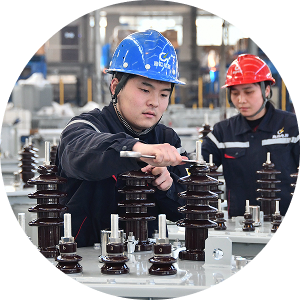
When reviewing a supplier, I look at its product scope, manufacturing capacity, engineering experience, and ability to provide coordinated equipment. Hebei Gaojing Electrical Equipment Co., Ltd. is based in Handan, Hebei Province, and produces transformers, box-type substations, high- and low-voltage complete equipment, iron cores, charging equipment, and related products.
The company states that it was founded in 2008, operates across an area of approximately 100,000 square meters, and has more than 600 employees and six or more high-standard automated production workshops. Its product range includes 10 kV box-type substations, oil-immersed transformers, dry-type transformers, medium-voltage switchgear, and low-voltage distribution cabinets.
For buyers, the relevant point is not the company profile alone but how the supplier supports the complete project. I would request the proposed single-line diagram, equipment schedule, transformer test reports, switchgear specifications, enclosure protection details, routine-test records, installation drawings, commissioning procedures, warranty terms, and maintenance documentation before placing an order.
What is a box type substation? It is a compact and integrated solution for safely transforming and distributing electrical power, combining medium- or high-voltage switchgear, a transformer, low-voltage equipment, protection devices, and an enclosure. I consider it suitable when a project needs controlled installation, reduced civil construction, compact placement, and coordinated factory assembly.
The best choice depends on capacity, voltage ratio, transformer technology, environmental conditions, protection requirements, available space, and lifecycle maintenance. For a small commercial building, a dry-type compact substation may suit fire and indoor-access requirements, while a factory or solar farm may require an oil-immersed transformer, higher capacity, additional feeders, and more detailed protection coordination.
Before selecting a supplier, I recommend confirming the complete technical specification, installation conditions, applicable standards, testing scope, commissioning responsibilities, and long-term service plan. A properly specified box type substation can provide a practical electrical power distribution system, but its performance depends on engineering calculations, correct installation, tested protection, effective grounding, and scheduled maintenance.
Require More Customized Solutions?
We offer customization to meet your specific needs. Our expert team will collaborate with you to develop the perfect product for you
Navigation
Navigation
Contact Us
Tel: +86 188 3000 9955
E-mail: gjscb@hbgjdq.com
WeChat: zjj9232013
Add.: No.118, Luchan Road, Yongnian District, Handan City, Hebei Province, China
Send in Inquiry
Send in Inquiry