Sep.30,2026
The transformer core is a key component that determines how efficiently magnetic flux flows through a transformer. Stacked core and wound core are two common core construction methods. Both use laminated electrical steel to reduce eddy-current losses, but they differ significantly in manufacturing method, magnetic circuit design, losses, size, cost, and applications.
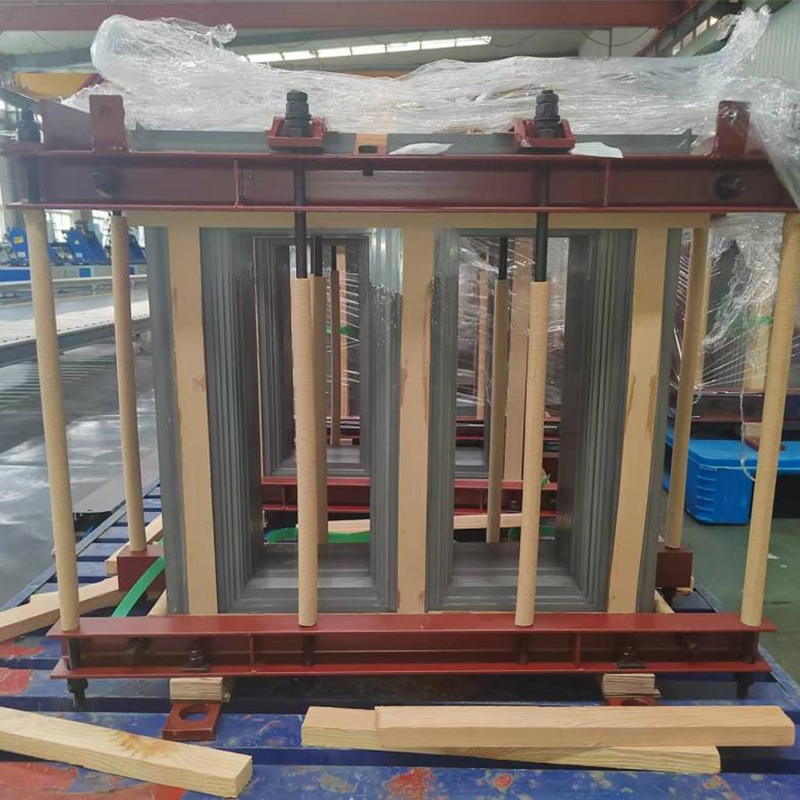
A stacked core is made by cutting electrical steel sheets into specific shapes and stacking them layer by layer to form the transformer core. The core consists of limbs and yokes, with the connections between them forming the magnetic circuit.
Modern stacked cores often use 45° mitered joints and step-lap lamination. These joint structures improve magnetic flux distribution and reduce additional core losses at the corners.
Stacked core construction is widely used because it offers flexible designs, straightforward manufacturing, and good scalability for different transformer ratings.
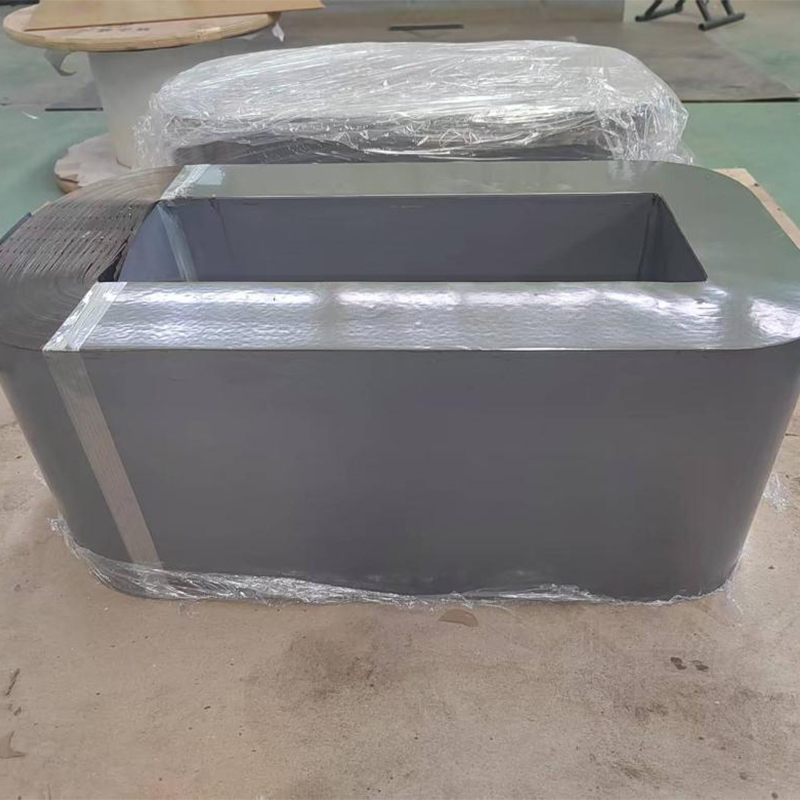
A wound core is manufactured by continuously winding a long strip of electrical steel into a closed magnetic circuit. The continuous winding reduces the number of joints in the magnetic path and keeps the steel grain direction aligned with the magnetic flux.
After winding, the core undergoes processing such as annealing to restore the magnetic properties affected during the winding process. Wound cores are widely used in energy-efficient distribution transformers.
The continuous magnetic path is one of the main reasons wound core transformers achieve low no-load losses and low excitation current.
| Feature | Stacked Core | Wound Core |
|---|---|---|
| Construction | Individual electrical steel laminations are cut and stacked | Continuous electrical steel strip is wound into a core |
| Core Joints | Multiple joints between limbs and yokes | Minimal joints in the magnetic path |
| Magnetic Flux Path | Flux passes through laminated joints | More continuous magnetic flux path |
| No-Load Loss | Higher than wound-core designs with comparable materials and ratings | Lower due to the continuous wound structure |
| Excitation Current | Higher | Lower |
| Noise | Higher joint-related magnetic vibration | Lower magnetic vibration |
| Size | Larger for equivalent designs | More compact |
| Design Flexibility | High | More dependent on core geometry and winding equipment |
| Manufacturing | Cutting and stacking process | Continuous winding and heat-treatment process |
| Cost | Lower manufacturing cost | Higher manufacturing complexity |
| Typical Applications | Distribution transformers, industrial transformers, large power transformers | Energy-efficient distribution transformers and low-loss transformer applications |
The main performance difference comes from the construction of the magnetic circuit. Wound cores reduce joint-related magnetic losses because the electrical steel forms a continuous wound path, while stacked cores use individual laminations assembled at the joints.
Wound core transformers provide lower no-load losses than stacked core transformers when the designs use comparable core materials and ratings.
The reason is straightforward: the continuous wound core reduces magnetic discontinuities at the joints and maintains better alignment between the steel grain and magnetic flux. This makes wound core construction particularly suitable for transformers that remain energized for long periods, including distribution transformers.
Stacked core transformers still provide strong energy performance when manufacturers use high-quality electrical steel, optimized 45° mitered joints, and step-lap construction.
The choice between stacked core and wound core depends on the transformer design and application requirements.
Choose a stacked core transformer when:
Choose a wound core transformer when:
The fundamental difference between stacked core and wound core transformers is the way the magnetic core is manufactured.
A stacked core uses individually cut electrical steel laminations assembled into a core, offering high design flexibility and broad application across transformer ratings. A wound core uses a continuous strip of electrical steel wound into a closed magnetic circuit, providing lower no-load losses and strong energy-efficiency performance.
For conventional and flexible transformer designs, stacked core technology remains an important choice. For applications focused on low losses and energy efficiency, wound core technology provides a strong solution.
Require More Customized Solutions?
We offer customization to meet your specific needs. Our expert team will collaborate with you to develop the perfect product for you
Navigation
Navigation
Contact Us
Tel: +86 188 3000 9955
E-mail: gjscb@hbgjdq.com
WeChat: zjj9232013
Add.: No.118, Luchan Road, Yongnian District, Handan City, Hebei Province, China
Send in Inquiry
Send in Inquiry