Sep.01,2026
When I compare oil immersed transformer vs dry type transformer designs, I begin with the cooling medium, insulation system, installation environment, load profile, fire requirements, and lifecycle cost. Oil-immersed units generally suit outdoor substations, utilities, high-capacity systems, and higher-voltage applications, while dry-type units commonly suit indoor commercial buildings, industrial rooms, and locations where oil containment or fire exposure must be minimized. The correct selection still depends on voltage, kVA or MVA rating, overload duration, harmonics, ambient temperature, altitude, humidity, maintenance capability, and future expansion.
!
Different alternatives solve different engineering problems. An oil-filled transformer may offer a compact arrangement and effective heat transfer for outdoor substations, while a dry-type transformer may reduce indoor fire-control work and routine liquid testing. I evaluate both designs through five layers: electrical performance, thermal behavior, site constraints, maintenance obligations, and total cost of ownership.
The comparison should include transformer voltage regulation, insulation coordination, short-circuit withstand, cooling method, enclosure requirements, sound levels, and environmental exposure. For industrial facilities, I also check motor starting currents, rectifier loads, variable-frequency drives, harmonic current, daily load factor, and expected overload periods. A nameplate rating alone does not show whether a transformer fits the actual duty cycle.
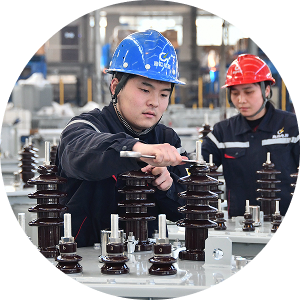
The main difference is the insulation and cooling medium surrounding the windings and core. An Oil-Immersed Transformer places the active parts in mineral oil, synthetic liquid, or ester fluid, which transfers heat to the tank and radiators while also providing electrical insulation. A dry-type transformer uses air circulation and solid insulation, commonly epoxy resin, varnish, fiberglass, or other molded insulation systems.
Oil-immersed transformers normally use a sealed tank or conservator arrangement, bushings, radiators, temperature indicators, pressure-relief devices, and liquid-level equipment. Dry-type transformers normally use cast-resin or varnish-insulated windings, air ducts, temperature sensors, and either natural-air or forced-air cooling. Neither design is automatically more efficient or safer in every application because losses, loading, enclosure ventilation, protection settings, and installation conditions influence the result.
| Selection factor | Oil-immersed transformer | Dry-type transformer |
|---|---|---|
| Cooling medium | Mineral oil, ester, or synthetic insulating liquid | Air and solid insulation |
| Common installation | Outdoor substations, utilities, factories, renewable-energy sites | Commercial buildings, indoor substations, industrial rooms |
| Fire considerations | Requires liquid classification, separation, containment, and fire assessment | No insulating liquid, but resin, enclosure, and surrounding materials still require fire assessment |
| Maintenance | Liquid sampling, leak inspection, bushing checks, protection testing, and periodic electrical tests | Cleaning, airflow inspection, winding temperature checks, connection tightening, and electrical tests |
| Typical cost pattern | Often lower equipment cost at medium and high ratings | Often higher purchase price, especially with enclosure or forced-air cooling |
| Thermal performance | Efficient heat transfer through liquid and radiators | Depends strongly on ventilation, winding design, ambient temperature, and cooling class |
| Environmental concern | Requires spill prevention and end-of-life liquid handling | Avoids liquid spills but still requires material and disposal controls |
| Best fit | Outdoor, high-load, high-voltage, and utility distribution | Indoor, fire-sensitive, space-constrained, and lower-maintenance installations |
An oil-immersed transformer is often selected when the installation has sufficient outdoor clearance, a suitable foundation, and a practical method for liquid containment. The liquid transfers heat away from the windings more effectively than air alone, allowing manufacturers to design compact radiators and support larger kVA or MVA ratings. For substations, utility feeders, renewable-energy collector systems, and factory distribution yards, this arrangement can reduce indoor room size and support higher loading.
The principal engineering advantage is not simply “oil cooling.” I examine the transformer’s cooling designation, such as natural oil circulation with natural air cooling or forced cooling with fans and pumps, then compare it with the load curve. A unit serving a factory with several hours of elevated load may require different thermal margins from a unit supplying a commercial building with a daytime peak and a low overnight load.
Oil-immersed transformer advantages and disadvantages must be considered together. The unit may require a bund, oil pit, fire wall, drainage design, leak detection, and separation from buildings or combustible materials. Maintenance can include oil sampling, dissolved-gas analysis where applicable, moisture assessment, filtration or reclamation, gasket inspection, bushing checks, and protection-device testing.
The liquid also affects procurement and insurance decisions. Mineral oil has different fire behavior and environmental consequences from natural ester or synthetic alternatives, so I would not approve a specification that says only “oil-filled.” The RFQ should identify the liquid type, flash point requirements, containment method, environmental obligations, and replacement procedure.
A dry-type transformer is commonly chosen for commercial buildings, hospitals, data rooms, transport facilities, high-rise developments, and indoor industrial substations. Because the windings do not sit in an insulating liquid, the installation does not require oil storage, liquid-level monitoring, or spill containment. That does not remove all fire risk, since insulation materials, cables, busbars, and connected equipment can still overheat or ignite.
For indoor use, I check the insulation system, enclosure rating, ventilation path, temperature-rise limit, noise level, and room clearances. Cast-resin windings can resist moisture better than some open-coil arrangements, but the transformer still needs protection from conductive dust, chemical vapors, condensation, and blocked airflow. A dry-type unit placed in a poorly ventilated room can exceed its rated temperature even when the connected load appears acceptable.
Dry type transformer advantages and disadvantages become more visible at high ratings and difficult site conditions. The purchase price may rise when the design requires a metal enclosure, forced-air cooling, acoustic treatment, harmonic-duty construction, or special indoor fire performance. Air cooling also makes the unit more sensitive to blocked ventilation, dust accumulation, high ambient temperature, and altitude derating.
I also distinguish between cast-resin and open-ventilated dry-type construction. Cast-resin designs encapsulate the windings in resin, while other dry-type units rely on air movement across insulated conductors. The correct choice depends on humidity, contamination, indoor air quality, service access, and the manufacturer’s stated environmental limits.
Neither transformer is universally better. Oil-immersed units generally fit outdoor substations, high-capacity feeders, high-voltage systems, and sites where liquid containment and scheduled maintenance are manageable. Dry-type units generally fit indoor commercial buildings, fire-sensitive locations, and facilities that prefer to avoid liquid inspection and spill-control systems.
Efficiency must be compared using guaranteed losses rather than the cooling label. I request no-load loss, load loss at a defined reference temperature, impedance, sound level, temperature rise, and efficiency at the expected operating points. A dry-type transformer with lower guaranteed losses may cost less to operate than an oil-filled unit, while an oil-immersed transformer may have a lower total cost when its purchase price, thermal arrangement, and load profile are favorable.
| Operating requirement | More suitable starting point | Engineering reason |
|---|---|---|
| Outdoor utility substation | Oil-immersed | Liquid cooling and weather-rated tank construction support outdoor distribution |
| Indoor commercial building | Dry-type | Avoids liquid containment and simplifies room-level fire planning |
| Large factory with sustained high load | Oil-immersed or specialized dry-type | Requires load-curve, cooling, short-circuit, harmonics, and maintenance analysis |
| Hospital or occupied facility | Dry-type | Reduces liquid-spill concerns near occupied spaces |
| Renewable-energy collector substation | Oil-immersed often preferred | Outdoor placement, high capacity, and thermal density may favor liquid cooling |
| High harmonic current | Either, with special design | Requires K-factor or harmonic-loss analysis, shielding, and temperature-rise verification |
| Humid or contaminated environment | Site-specific | Sealing, enclosure, resin system, oil condition, and ventilation must be assessed |
| Future expansion planned | Either, with spare capacity review | The selected rating should reflect staged load growth and transformer parallel operation |
Purchase price alone can distort an oil immersed transformer vs dry type transformer comparison. For a transparent evaluation, I divide total cost into equipment price, transport, civil works, fire protection, installation, testing, energy losses, planned maintenance, insurance, environmental controls, downtime exposure, and eventual replacement. The correct result depends on the project’s electricity tariff, annual operating hours, load factor, local construction prices, and required service interval.
For illustration, assume a 1,000 kVA transformer operates 8,000 hours annually, with an average load factor of 60%, an electricity price of $0.10 per kWh, and a 20-year evaluation period. If one design has 2.0 kW of no-load loss and 10.0 kW of load loss at rated load, its estimated annual loss energy is approximately 2.0 × 8,000 plus 10.0 × 0.60² × 8,000, or 44,800 kWh. At the stated energy price, that equals about $4,480 per year before demand charges and tariff changes.
| Cost category | Oil-immersed transformer | Dry-type transformer |
|---|---|---|
| Equipment purchase | Often lower at comparable medium or high ratings | Often higher with enclosure, resin insulation, or forced-air cooling |
| Foundation and room works | Outdoor foundation, drainage, bund, and separation may be required | Indoor room, ventilation, access, and fire-rated construction may be required |
| Fire protection | May include containment, detection, separation, and liquid-specific measures | May reduce liquid-related measures but still requires electrical fire protection |
| Energy losses | Compare guaranteed no-load and load losses | Compare guaranteed no-load and load losses at the same reference conditions |
| Maintenance | Oil testing, leak inspection, filtration, bushings, and protection devices | Cleaning, airflow, terminals, sensors, fans, and insulation tests |
| Insurance and environmental cost | May increase with liquid volume and site risk | May reduce spill-related exposure, subject to insurer assessment |
| Replacement | Liquid disposal or recovery may be necessary | Resin, winding, and enclosure disposal must be planned |
The example is not a quotation or universal savings claim. It shows why a $10,000 difference in purchase price can be outweighed by loss energy over 20 years, while additional civil works can reverse the result. I would calculate at least three load points—25%, 50%, and 100%—because no-load loss dominates lightly loaded transformers and load loss rises approximately with the square of current.
Before choosing a transformer, I collect the 15-minute or 30-minute demand record where available and separate continuous, intermittent, standby, and emergency loads. I identify motor starting, welding equipment, rectifiers, variable-frequency drives, battery chargers, data-processing loads, and nonlinear equipment because harmonics can increase winding heating. I also record overload duration, expected duty cycle, ambient temperature, altitude, humidity, dust, corrosive gases, and available ventilation.
Future expansion should be expressed in kVA or MVA, percentage growth, and expected date rather than a general allowance. For example, a facility with a present maximum demand of 650 kVA and planned expansion to 900 kVA may need a 1,000 kVA unit, parallel transformers, or a staged substation design depending on redundancy requirements. I also verify impedance compatibility before specifying parallel operation, since mismatched impedance can produce unequal load sharing.
A reliable RFQ should define rated power, primary and secondary voltage, frequency, phase arrangement, vector group, tap range, impedance, insulation levels, cooling class, temperature-rise limit, enclosure requirements, sound limit, and altitude correction. I also require guaranteed no-load loss, load loss, total loss, short-circuit withstand, and voltage regulation at stated power factors. For dry-type transformers, the RFQ should identify resin system, partial-discharge limit, environmental class, enclosure rating, and fan-control logic.
For oil-immersed transformers, I specify liquid type, filling method, tank pressure requirements, conservator or sealed-tank arrangement, radiator construction, oil-level indication, pressure relief, temperature monitoring, and containment provisions. I ask the manufacturer to identify routine and type tests, including winding resistance, ratio, polarity or vector group, impedance, applied voltage, induced voltage, losses, temperature rise, insulation resistance, and partial-discharge testing where applicable.
At commissioning, I confirm that the delivered nameplate matches the approved drawings and test reports. Site acceptance should include insulation resistance, winding resistance, turns-ratio verification, phase sequence, grounding continuity, protection-trip tests, temperature-sensor checks, fan operation, oil condition where applicable, and cable termination inspection. Applicable IEC or IEEE standards should be stated in the contract, including the specific edition and any local utility or building-code requirements.
When I review a manufacturer, I check whether it can supply both oil-immersed and dry-type configurations, provide design calculations, issue routine test reports, and support site commissioning. Hebei Gaojing Electrical Equipment Co., Ltd. describes itself as an enterprise involved in research and development, production, and sales of energy-saving transformers, box-type substations, high- and low-voltage equipment, and charging equipment. Its published company information states that it was founded in 2008, occupies approximately 100,000 square meters, operates more than six high-standard automated production workshops, and has more than 600 employees.
The company’s listed transformer range includes oil-immersed silicon-steel and amorphous-alloy designs, as well as resin-insulated dry-type transformers using tridimensional toroidal or laminated cores. Its published technical cases also describe a 4,000 kVA/37 kV amorphous tridimensional toroidal-core transformer type-test report obtained in 2023 and an independently developed resin-cast dry-type distribution transformer. These statements should be verified against the project’s required certificates, test scope, applicable standards, and delivery documentation before contract award.
For the oil immersed transformer vs dry type transformer decision, I select an oil-immersed transformer when the project prioritizes outdoor installation, high capacity, high-voltage distribution, thermal density, and a lower initial equipment cost, provided that oil containment, fire separation, inspection, and environmental controls are practical. I select a dry-type transformer when the project prioritizes indoor placement, reduced liquid-related maintenance, limited spill exposure, and proximity to occupied or fire-sensitive areas.
The next step is to prepare a comparable RFQ for both technologies using the same kVA or MVA rating, voltage ratio, impedance, loss guarantees, temperature-rise limit, sound limit, test requirements, and service life assumptions. Then I calculate the 20-year cost using the actual load curve, energy tariff, civil-work estimate, maintenance plan, insurance conditions, and replacement value. This approach produces a defensible choice for commercial buildings, factories, renewable-energy systems, utilities, outdoor substations, and high-load industrial facilities rather than relying on transformer type alone.
Require More Customized Solutions?
We offer customization to meet your specific needs. Our expert team will collaborate with you to develop the perfect product for you
Navigation
Navigation
Contact Us
Tel: +86 188 3000 9955
E-mail: gjscb@hbgjdq.com
WeChat: zjj9232013
Add.: No.118, Luchan Road, Yongnian District, Handan City, Hebei Province, China
Send in Inquiry
Send in Inquiry