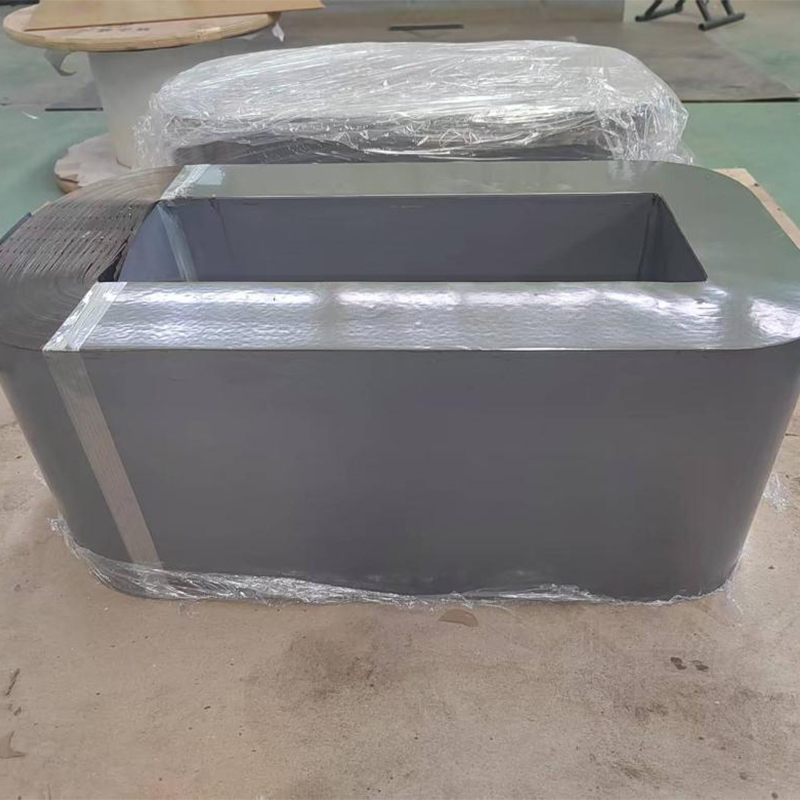
Transformer Core Material Considerations
A transformer core’s material, size, and shape all play an important role in its performance capabilities. Below, we’ll discuss each of these factors in detail, offering an in-depth look at transformer design and which type of transformer core is most efficient for various use cases.
A transformer core is a magnetic device that converts input power into output power—it’s the heart of the transformer. Since the core determines the transformer’s output voltage, core material is an essential consideration that impacts performance. Ideal core materials have high magnetic permeability, and they can be designed in many sizes and shapes.
Types of Transformer Core Materials
Transformers are driven by the flux that occurs between their primary and secondary windings. When an input voltage is applied, it passes through the primary winding, producing an electromagnetic field around it. That electromagnetic field induces a voltage in the secondary winding. Magnetic cores determine how much voltage is induced in the secondary winding and act as the pathway for this flux.
When selecting the right transformer for a given application, one of the first steps is to identify the most suitable transformer core material. Ferrous, ferrite, powdered, and amorphous materials are the most common types. Below, you can learn more about the options within each of these categories.
1. Ferrite
With the exception of applications that require significant mechanical durability, ferrites offer many advantageous properties for magnetic cores and are the best choice in many transformer applications. A ferrite core is one that contains iron. Some of the most significant properties of ferrites include:
- High Magnetic Permeability: They allow a significant amount of magnetic flux to pass through them.
- High Resistivity: Ferrites feature low electrical resistance.
- Electrical and Thermal Conductivity: Ferrite materials can efficiently conduct heat and electricity away from the core.
- Ferrite Ceramics: This is a class of ceramic compounds made from iron oxide and at least one metallic element, such as nickel, zinc, copper, or cobalt.
2. Ferrous
- Grain-Oriented Silicon Steel: This material is widely used in energy-efficient transformers and high-performance generators. In the form of wound, laminated, or punched sheets, grain-oriented silicon steel is ideal for small and large transformers, including power and distribution transformers.
- Non-Oriented Silicon Steel: With its high electrical resistivity, non-oriented silicon steel cores offer stable, long-lasting performance.
- Nickel: Ferro-nickel or permalloy is a soft, magnetic material made from varying proportions of nickel (Ni) and molybdenum (Mo) in an iron alloy. These cores are commonly used in audio applications to minimize distortion across a wide frequency range, such as 20 Hz to 20 kHz.
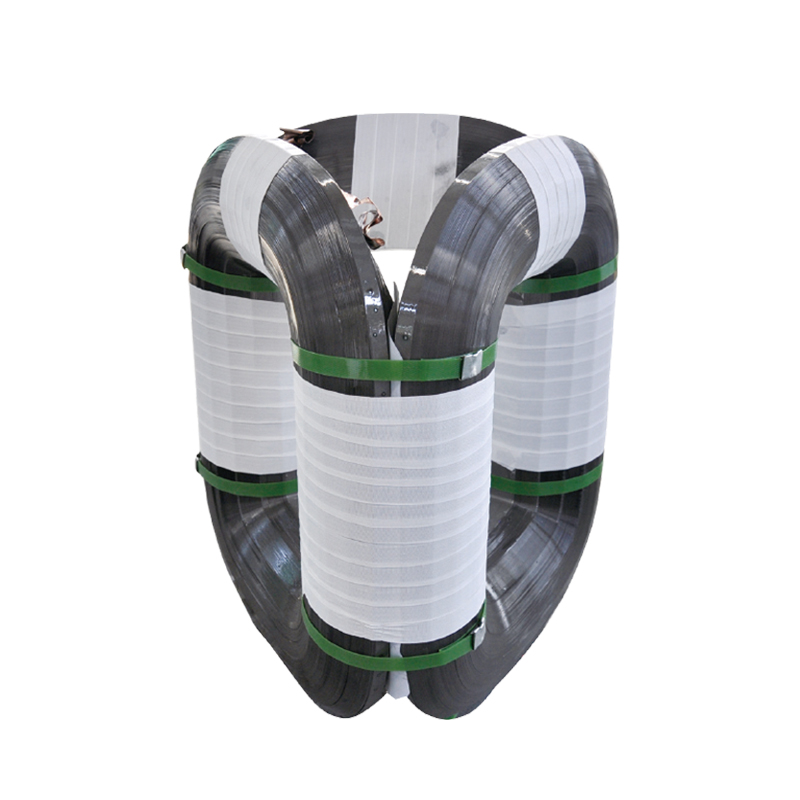
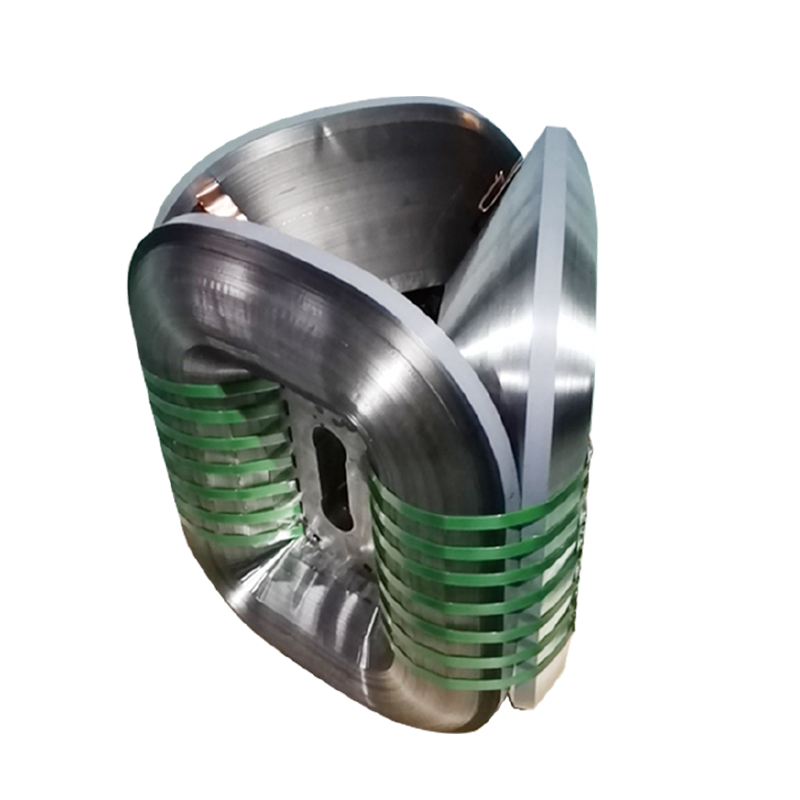
- Tape-Wound Cores: These cores are made using special equipment that winds thin steel strips onto a mandrel using controlled tension. The result is a toroidal core with a uniform cross-section.
3. Powdered
- Iron Cores: Made from ferromagnetic powder, these cores offer stability across a wide range of temperature and magnetic flux levels. Before being made into a core, the discrete particles are coated with a thin layer of electrical insulation. They are then compacted under high pressures to create the desired geometry of the core. The electrical insulation of each particle means there is a distributed air gap throughout the core, which can therefore maintain inductance linearity within a DC biased field and be used at high frequencies.
- Alloy Cores: Cores made from various metal powder alloys are typically used to produce higher power and frequency applications. Due to their unique composition, they eliminate thermal aging issues and minimize losses. Examples of alloy combinations used in these cores include:
- Iron, nickel, and molybdenum alloys
- Silicon, iron, and aluminum alloys
- Molybdenum and nickel alloys
- Silicon and iron alloys
4. Amorphous
- Amorphous Steel: One of the most popular options for transformer magnetic cores, amorphous steel is a metallic glass alloy with a random non-crystalline atomic structure, making it suitable for high-frequency applications that require fast switching speeds and low losses.
- Nanocrystalline Cores: These cores are produced by rapidly cooling molten metal, creating a unique crystalline structure. Cores are then manufactured from multiple layers of this paper-thin metallic tape. Nanocrystalline cores have a high saturation flux density, making them suitable for low-frequency applications requiring higher magnetic fields without saturating.
Shape
A core’s shape has a significant impact on its efficiency, inductance, capacitance, and overall cost. Certain applications require a specific core geometry to achieve the necessary performance level. A few key considerations in transformer core shape include:
- Window Configuration: Windows are extremely important in transformer core design and should be as wide as possible to maximize winding breadth while minimizing the number of layers. Wide windows minimize Rac and leakage inductance and lessen the impact of the fixed creepage allowance dimension. Wider windows also result in less required winding height and better utilization of the window area.
- Gap Presence: Transformer core shapes can feature a gap or an area within the core that is filled with air. Gaps allow more energy to be generated and stored because they prevent the core material from becoming magnetically saturated. In addition, gaps allow electrical current to flow through ferromagnetic cores in a more controlled and metered manner. To avoid unwanted drops in energy density, the air gaps are designed to be as narrow as possible.
In addition to windows and gaps, transformer core types come in many shapes and configuration options, including the following:
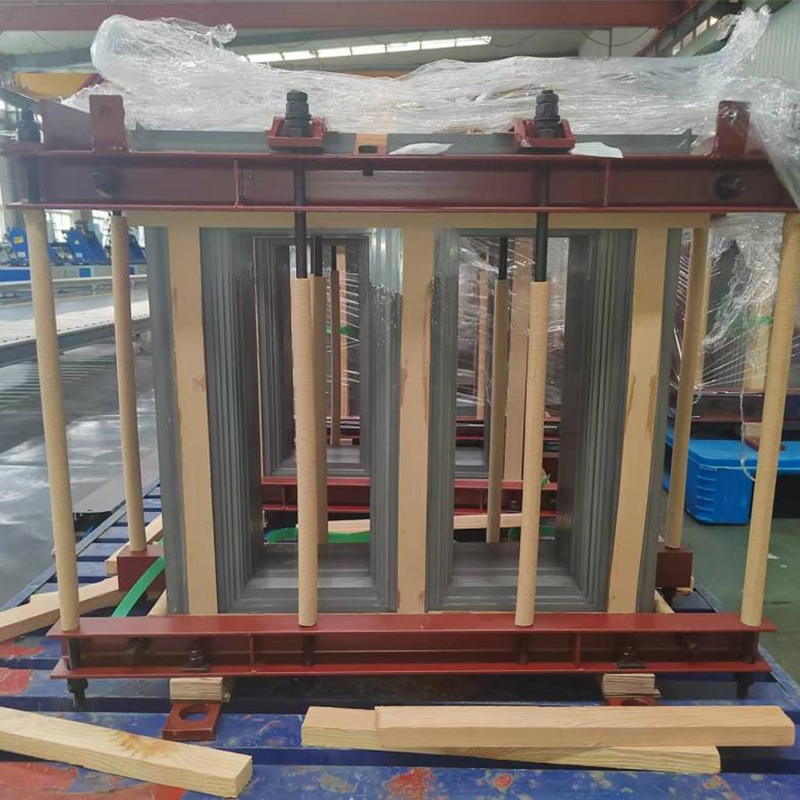
- Laminated Cores: Laminated cores made from stamped steel strips come in a variety of shapes. Popular configurations include EL, EE, EI, UU, UI, and F. To minimize waste, scrapless dies can be designed for this process. For a deeper understanding of core construction, see our guide to the difference between stacked core and wound core, including their construction, magnetic flux paths, losses, and typical applications.
- Pot Cores and PQ Cores: These designs feature a small, square-shaped window area. Pot cores are not well-suited for high-frequency switch-mode power supply (SMPS) applications, and their creepage allowance wastes a large fraction of the window area. However, their advantage is that they offer better magnetic shielding than designs that use EE cores.
- EC, ETD, and LP Cores: These designs are all EE core shapes and feature large window areas relative to the core size. These windows have the desired wide configuration.
- Toroidal Cores: Properly wound toroidal cores have all windings uniformly distributed around the entire core. The winding breadth is essentially the core’s circumference. Toroidal cores have the lowest possible leakage inductance and minimize the number of winding layers. However, toroidal cores can be challenging to wind, particularly with the gauge and shape of conductors in SMPS transformers. At Gaojing, we have decades of experience manufacturing high-quality, repeatable toroidal cores for even the most challenging applications.
Size
Transformer cores come in many sizes, with multiple variables involved in selecting the correct one. Note that a core’s power handling capability does not scale linearly with its volume or area. For example, a larger transformer must operate at a lower power density since its heat-dissipating surface area increases less than its heat-producing volume.
A transformer’s core size is measured in inches. The wider a core is, the lower the transformer’s loss of resistance will be. However, eventually, the core can become too wide to be practical. Unless you are building a very high-power device, smaller cores deliver higher efficiency in most applications.
Learn More About Gaojing’s Transformer Solutions
Selecting the right transformer core material, type, size, and shape is essential for achieving the required electrical performance, efficiency, and reliability. The selection process should consider the following factors:
- Operating Frequency – Determines the suitable core material and magnetic design.
- Core Saturation and Hysteresis Characteristics – Affect the transformer’s magnetic performance and operating stability.
- Core Loss – Directly influences energy efficiency and temperature rise.
- Weight and Size – Important for installation space, transportation, and equipment integration.
- Cost – Must be balanced with performance, efficiency, and service life.
- Operating Voltage and Power Rating – Determine the required core cross-sectional area and magnetic flux density.
- Cooling Requirements – Influence the transformer’s thermal design and overall structure.
- Application Environment – Factors such as temperature, humidity, pollution, and installation conditions affect material and construction choices.
Gaojing Electrical provides transformer solutions using different core technologies, including laminated silicon steel cores, amorphous alloy cores, and three-dimensional toroidal cores. By selecting the appropriate core material and construction for each application, Gaojing helps customers achieve reliable power distribution, lower losses, and long-term operating efficiency.
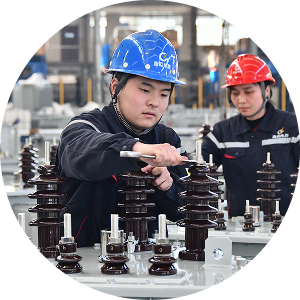
Explore Gaojing’s transformer products to find the core structure and configuration that best matches your voltage, capacity, efficiency, and installation requirements.